
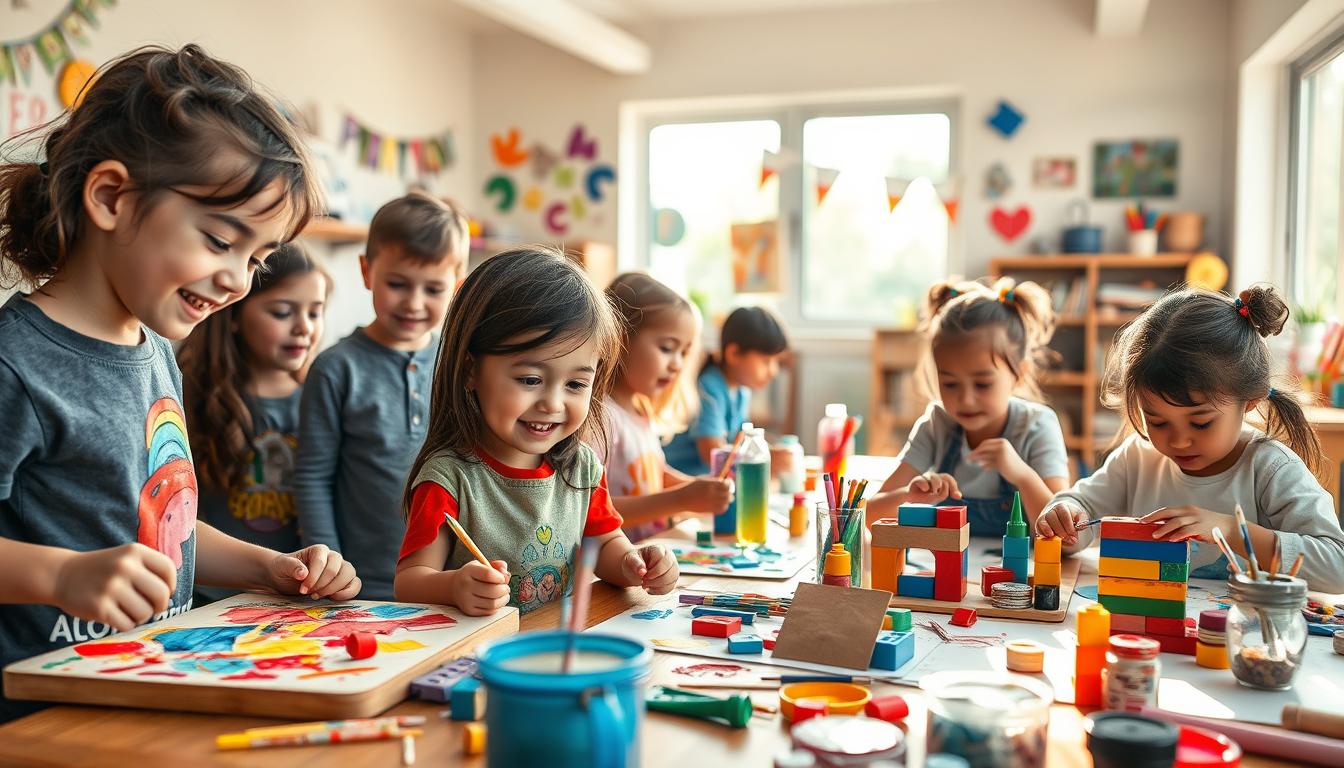
As a parent, I know how vital it is to nurture imagination in kids. The school year can be busy with studies, but it’s key to also boost creative development. After-school projects are a great way to do this, helping kids gain skills for life.
Through creative activities, kids learn to solve problems and think differently. This article shows how after-school projects can be both fun and effective in promoting child creativity. By making these projects part of their daily life, parents can instill a lifelong love of learning and creativity in their kids.
Key Takeaways
- Nurturing imagination is crucial for kids’ development
- After-school projects can help promote creative skills
- Creative activities can improve problem-solving skills and confidence
- Incorporating creative projects into daily routine can foster a lifelong love of learning
- Parents play a significant role in encouraging creative development
The Importance of Creative Development Beyond School Hours
When school ends, a world of creativity opens up for kids. After-school hours let them explore their imagination freely. They can do things they love, like painting or building with Legos, which boosts their creativity.
Why After-School Hours Are Prime Time for Creativity
After-school hours are perfect for creativity because they’re relaxed. Kids can dive into projects that excite them without school pressure. Encouraging creative expression here builds confidence and problem-solving skills. Activities like arts and crafts, storytelling, or cooking spark their imagination.
Balancing Structured Learning and Creative Freedom
It’s key to balance structured learning with creative freedom. Giving kids the freedom to choose their after-school activities fosters a love for learning and creativity. Parents can support this by offering various materials and resources. This lets kids lead their creative projects.
“Creativity is as important as literacy, and we should treat it with the same status.”
By finding the right balance, we help kids become innovative thinkers.
Understanding the Creative Needs of Different Age Groups
It’s key to know how children’s creativity changes with age for fun after-school projects. Kids go through different stages, each with its own creative needs.
Elementary School Children (5-10 years)
Young kids love to explore and show their creativity through art and stories. It’s important to offer projects that match their growing skills and short attention spans.
Project Complexity and Attention Span Considerations
Projects for 5-10 year olds should be fun but not too hard. Short, focused activities with clear goals are best. Their short attention span needs to be kept in mind.
Recommended Project Types for This Age Group
Activities like coloring, simple crafts, and building blocks are great. They help with fine motor skills and spark imagination.
Middle School Children (11-13 years)
When kids reach middle school, they start to show more interest in certain creative activities. It’s important to support their independence while guiding their creativity.
Supporting Independence and Skill Development
Middle school kids do well with projects that let them explore their interests on their own. This is a good time to introduce more complex skills like coding or advanced crafting.
Projects That Appeal to Emerging Identities
Projects that let kids express themselves, like writing, digital art, or designing, are very appealing. These activities help them discover who they are and find their creative voice.
Setting Up a Creativity-Friendly Environment at Home
To encourage creative expression, setting up a conducive environment at home is essential. This involves creating spaces that inspire imagination and provide the necessary tools for various creative projects.
Creating Dedicated Creative Spaces
Designating a specific area for creative activities can significantly enhance a child’s ability to focus on their projects. This space should be well-lit, comfortable, and equipped with the basic supplies needed for art, crafting, and other creative pursuits. By having a dedicated space, children can leave their projects out and return to them as they wish, fostering a sense of continuity and creativity.
Essential Supplies for Various Creative Projects
Having the right supplies is crucial for encouraging creative expression. The types of supplies needed can vary depending on the child’s age and interests.
Basic Art Supply Starter Kit
A basic art supply kit should include items such as crayons, markers, paints, and colored pencils. These tools allow children to explore different mediums and techniques, developing their fine motor skills and creativity. It’s also beneficial to include a variety of paper types and sizes to accommodate different projects.
Organization Systems That Encourage Use
To keep the creative space organized and functional, implementing effective organization systems is key. Using storage bins, shelves, and baskets can help keep supplies within reach while maintaining a clutter-free environment. Labeling these storage units can also help children learn to categorize and retrieve their materials efficiently.
Art Projects That Develop Fine Motor Skills and Imagination
Art projects are great for kids to improve their fine motor skills and spark their imagination. Through different activities, they can get creative and better at handling materials. This is why art is so important for kids’ growth.
Mixed Media Collages and Journals
Mixed media collages and journals are perfect for boosting creativity and fine motor skills. Kids can mix various textures and materials to make unique art. These projects help them try new things and explore.
Weekly Art Journal Prompts
Weekly art journal prompts offer kids a new challenge every week. They might focus on nature, shapes, or personal stories. By answering these prompts, kids can find their artistic voice and grow more confident.
Texture Exploration Through Collage
Collage is a fun way for kids to explore different textures. They can cut, glue, and arrange materials to make interesting pieces. This activity improves their touch and fine motor skills.
Recyclable Materials Sculpture Series
The recyclable materials sculpture series teaches kids about sustainability and fine motor skills. By making sculptures from recyclables, kids use their imagination and solve problems. This project also teaches them to be resourceful and care for the environment.
Cardboard Architecture Projects
Cardboard architecture projects help kids improve their spatial reasoning and fine motor skills. They can build anything from simple houses to big cities. This activity boosts their engineering and creativity skills.
Plastic Bottle Transformation Challenges
Plastic bottle transformation challenges make kids think creatively about waste. By turning bottles into useful or decorative items, they practice crafting and learn about recycling. This activity encourages imagination and helps them care for the environment.
STEM-Based Creative Projects for Future Innovators
STEM projects are key in growing future innovators. They help kids solve problems, think creatively, and get ready for big challenges ahead.
DIY Science Experiments with Household Items
DIY science experiments with household items are a great start for kids. They’re fun and teach complex science in a simple way.
Kitchen Chemistry Adventures
Kids love kitchen chemistry adventures. Making slime or a homemade lava lamp sparks their curiosity and encourages more exploration.
Physics Exploration Through Play
Physics through play is fun and teaches STEM concepts. Kids learn about gravity, friction, and motion using everyday things.
Coding and Robotics Projects for Beginners
Coding and robotics projects boost problem-solving and creative thinking. They’re perfect for beginners, fitting all ages and skill levels.
Screen-Free Coding Activities
Screen-free coding activities teach coding basics without screens. They improve problem-solving and critical thinking.
Simple Circuits and Electronics Projects
Simple electronics projects introduce kids to electronics. They learn the basics and develop problem-solving skills by building circuits and projects.
| Project | Age Group | Skills Developed |
|---|---|---|
| Kitchen Chemistry | 8-12 years | Chemistry, Problem-Solving |
| Coding Puzzles | 6-10 years | Logic, Critical Thinking |
| Simple Circuits | 9-13 years | Electronics, Problem-Solving |
STEM projects are vital for kids’ daily lives. They help develop skills that last a lifetime. As parents and teachers, we must give them the tools to succeed.
Fostering Creativity in Children Through Storytelling and Writing
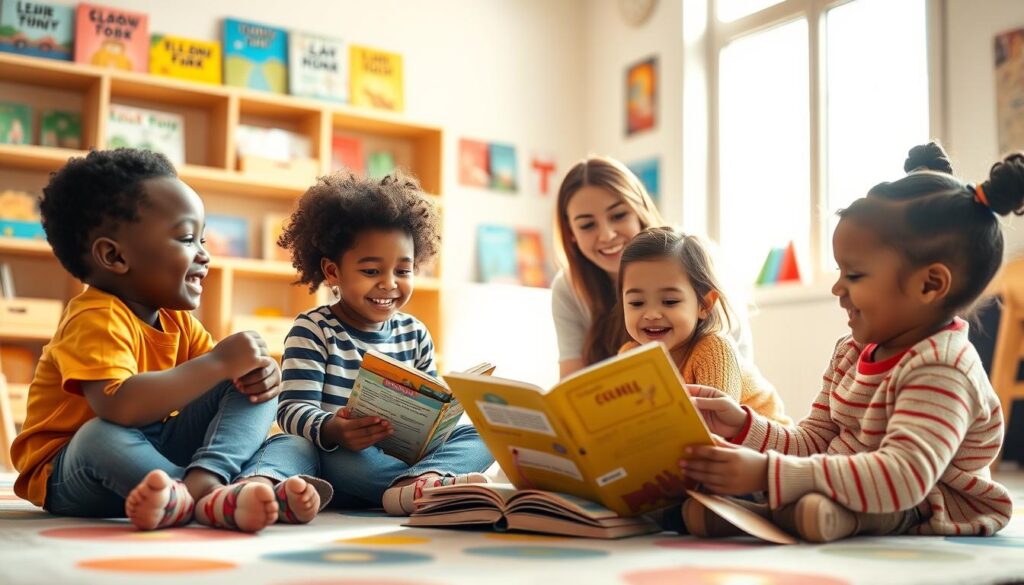
Storytelling and writing are great ways to nurture imagination in kids. These activities help them think creatively, talk better, and feel more confident. They learn to express themselves in new ways.
Family Storybooks and Comics
Creating family storybooks and comics is a fun way to spark creativity. Kids can mix their imagination with storytelling. This makes their stories unique and personal.
Start by giving your child paper, markers, and glue. Let them create freely.
As “The most important thing in communication is hearing what isn’t said.” – Peter Drucker, listening to what your child doesn’t say helps make stories they’ll love.
Starting a Creative Writing Journal Routine
Keeping a creative writing journal is good for kids’ writing skills. Encourage them to write a little every day.
5-Minute Daily Writing Prompts
Daily writing prompts can spark kids’ imaginations. Ask them to write about a favorite memory, describe a character, or dream up a magical world.
Character Development Exercises
Exercises on character development help kids create more interesting stories. Ask them to think about their character’s goals, strengths, and weaknesses. They should also imagine their character’s past.
By making storytelling and writing part of their daily life, you help foster creativity. This encourages a love for learning and self-expression that lasts a lifetime.
Music and Movement Projects for Kinesthetic Learners
Music and movement activities are great for kinesthetic learners. They help develop creative skills in a fun way. Kids get to play and express themselves through music and movement.
DIY Musical Instruments and Sound Exploration
Making DIY musical instruments is both fun and educational. Kids can use items like pots, pans, and wooden spoons to create sounds. This project boosts art and innovation for kids as they explore different sounds.
Exploring sounds can lead to learning about rhythm and beat. Kids can practice clapping or tapping to their favorite songs. This helps them improve timing and coordination.
Choreography Projects and Dance Challenges
Choreography projects let kinesthetic learners express themselves through dance. By making routines to their favorite songs, kids get to be creative and stay fit.
Creating Dance Routines to Favorite Songs
Ask kids to choose their favorite songs and make dance routines. This activity is great for physical exercise and boosts creativity. It lets them try out different movements and styles.
Movement Storytelling Activities
Movement storytelling uses dance to tell stories or share messages. It’s a great way for kids to improve communication and creativity. It’s a fantastic way to encourage creative expression.
Collaborative Family Projects That Strengthen Bonds
I think working on projects together as a family can make us closer. Doing things together lets everyone share ideas and make something special. It’s a great way to foster creative thinking in children and bring families closer.
Multi-Generation Creative Challenges
Trying out multi-generation creative challenges is fun and rewarding. It lets everyone, no matter their age, share their views and ideas.
Family Time Capsule Projects
Making a family time capsule is a fun way to keep memories alive. Pick items that show what your family likes now, then seal them to open later.
Collaborative Art Installations for Your Home
Creating a family art piece for your home is a fun project. Choose a theme, pick materials, and make something that shows your family’s spirit.
Community-Based Creative Initiatives
Joining community creative projects helps families connect with others. You can help with local art or clean-up efforts.
Neighborhood Art Exchanges
Starting a neighborhood art exchange is a great way to meet people. Share your art, learn from others, and enjoy making something together.
Service-Learning Through Creative Expression
Using creativity to help others is a rewarding way to give back. Use art, music, or writing to make a difference.
These projects help families cultivate creativity in young minds and promote child creativity. The most important thing is to have fun and try new things together.
Nature-Inspired Projects That Connect Creativity with the Outdoors
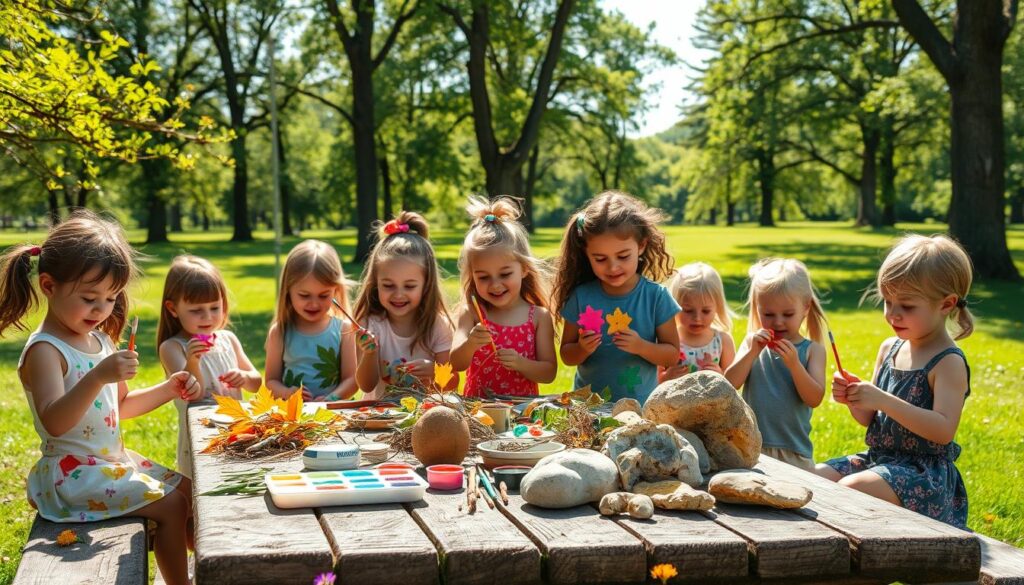
Connecting with nature is a great way to spark kids’ imagination and creativity. It helps them see the world in a new light and grow their artistic skills.
Seasonal Nature Art Installations
Seasonal nature art installations are a fantastic way to get kids creative outdoors. They use natural materials to make art that shows off the season.
Autumn Leaf Art Projects
In autumn, kids can make stunning leaf collages or mobiles. It’s a fun way to appreciate the season and improve their fine motor skills.
Winter Ice and Snow Sculptures
Winter brings a chance to get creative with snow and ice. Kids can build snowmen, make ice sculptures, or draw on frozen ponds. It’s a cool way to explore winter’s textures and shapes.
Gardening and Plant-Based Creative Activities
Gardening is a great way to mix creativity with nature. Kids learn about growth and care for their garden. They also get to be creative with plant arrangements and garden decor.
Indoor Herb Gardens and Plant Journals
Indoor herb gardens are a fun, small project. Kids can grow plants and keep a journal of their progress. It’s a mix of gardening, writing, and drawing that deepens their connection to nature.
Seed-to-Table Creative Documentation
Documenting a garden’s journey from seed to table is another creative activity. Kids can write about their experiences and make recipes with their harvest. It’s a creative way to appreciate the hard work of growing food.
Overcoming Creative Blocks and Maintaining Enthusiasm
Helping children be creative is key, but they will face creative blocks. These blocks can be tough for kids and parents. But, with the right steps, they can be beaten.
Strategies for When Children Say "I'm Bored"
When kids say “I’m bored,” it’s a chance to introduce new creative activities. This can spark their interest and keep them engaged.
The Creativity Jar: Emergency Inspiration
A “creativity jar” is a great way to fight boredom. Fill it with slips of paper with creative ideas like drawing or painting. When bored, kids can pick an activity from the jar.
Rotating Project Stations to Keep Interest Fresh
Setting up rotating project stations is another good idea. Create stations with different materials and activities. Switch them every few days to keep things exciting.
Celebrating Process Over Product
It’s important to celebrate the creative process, not just the end result. This creates a positive and encouraging environment for creativity.
Documentation Methods That Honor Effort
Documenting the creative process shows appreciation for a child’s hard work. Take photos, keep a journal, or make a scrapbook of their projects.
Creating a Positive Response to Creative Risk-Taking
Encouraging kids to take creative risks is crucial. Praise their efforts and tell them to try new things, even if they might not work.
Conclusion: Nurturing Creative Thinkers for Life
As we guide children in their creative journey, after-school projects are key. They help kids develop skills that last a lifetime. These activities spark creativity in young minds.
Encouraging creative thinking is for all ages and activities. It’s about making a space where imagination and innovation thrive. Parents can help their kids become creative problem solvers for the future.
Supporting our children’s creative interests makes them confident and innovative. Looking back at the projects and activities we’ve discussed, we see the value of nurturing creativity. It’s a journey that pays off in the long run.
FAQ
What are some effective ways to foster creativity in children during the school year?
Encourage after-school projects and create a space that fosters creativity. Support various creative outlets like art, music, and writing. This helps children grow creatively.
How can I balance structured learning with creative freedom for my child?
Set aside times for learning and creative play. This balance helps your child develop and keep their imagination alive.
What types of projects are suitable for elementary school children to develop their creativity?
Try mixed media collages, journals, and sculptures made from recyclables. These projects improve fine motor skills and spark imagination, fitting well for elementary school kids.
How can I encourage my child to continue exploring their creativity beyond after-school projects?
Make creativity a part of daily life. Keep a creative writing journal or try DIY science experiments. This helps your child keep exploring and appreciate creativity more.
What are some strategies for overcoming creative blocks in children?
Use a creativity jar for quick ideas. Change up project stations to keep things interesting. Focus on the journey, not just the end result, to keep kids excited about creating.
How can I, as a parent, support my child’s creative development and foster creative thinking?
Be supportive and creative together. Give positive feedback on their efforts. This helps your child grow creatively and think outside the box.
What role does nature play in inspiring creativity in children?
Nature is a big source of inspiration for kids. Activities like nature art, gardening, and plant-based projects connect them with the outdoors. It helps them appreciate nature more.